
713-229-8333

-

- Home
- Our Firm
- DWI
- First DWI
- Second DWI
- Third DWI
- Fourth DWI or More
- Felony DWI
- Commercial Vehicle DWI
- Motorcycle DWI
- Controlled Substance or Drug DWI
- Out of State Resident DWI
- College Student DWI
- Underage DUI
- DWI Defense for Licensed Professionals
- CPA Licenses
- Dental Licenses
- EMT Licenses
- Law Licenses
- Medical Licenses
- Mental Health Counselor Licenses
- Small Business
- Nursing Licenses
- Pharmacist Licenses
- Pilot Licenses
- Podiatrist Licenses
- Psychologist Licenses
- Real Estate Licenses
- SEC Securities Licenses
- Security Clearances
- Teaching Licenses
- Veterinarian Licenses
- Optometrist Licenses
- Collateral Consequences of DWI
- DWI Criminal Procedure
- ALR Hearing
- Open Container
- DWI Tests
- Boating While Intoxicated
- Criminal Defense
- Drug Crimes
- Drug Possession
- Drug Distribution
- Drug Conspiracy
- Drug Diversion
- Juvenile Drug Crimes
- Internet Drug Crimes
- Drug Crime Enhancements
- Drug Penalty Groups
- Drug Information
- Drug Crimes FAQ
- What Is Considered a Dangerous Drug in Texas?
- What Evidence Is Needed to Convict a Person of a Drug Crime in Texas?
- Is Possession of Marijuana a Crime in Texas?
- What Are the Consequences for Repeat Drug Offenders in Houston?
- Should I Plead Guilty to a Drug Crime Charge in Texas?
- What Is the Difference Between Federal and State Drug Crime Charges?
- Opioid Crimes FAQ
- Traffic Violations
- Assault Crimes
- Homicide Crimes
- Prostitution and Solicitation
- White Collar Crimes
- Theft
- Federal Crimes
- Federal Drug Charges
- Federal White Collar Crimes
- Immigration Crimes
- Federal Weapons Charges
- Obstruction of Justice
- Federal Crimes FAQ
- How Can an Attorney Help When Im Under Federal Investigation?
- What Happens if I Plead the Fifth in a Federal Crimes Case?
- Why Have I Been Accused of Obstruction of Justice?
- What Happens to Property That Has Been Forfeited and Seized by the Federal Government?
- What Should I Know About Federal Courts and the Federal Prison System in Texas?
- What Is a Currency Transaction Report?
- What Are Pre-Arrest and Arrest Warrants in Federal Crimes Cases?
- Other Crimes
- 3G Offenses
- Probation Violations
- Deferred Adjudication
- Expunctions
- Nondisclosures
- Defense Strategies
- Criminal Defense FAQ
- Drug Crimes
- Areas Served
- Houston Courts for DWI
- Harris County
- Baytown
- Bellaire
- Braeswood Place
- Cypress
- Deer Park
- East Downtown
- Friendswood
- Galleria
- Houston Heights
- Humble
- Jersey Village
- Katy
- Kingwood
- La Porte
- Memorial Villages
- Midtown
- Missouri City
- Montrose
- Pasadena
- Precinct 1
- Precinct 4
- Precinct 5
- Rice Military
- River Oaks
- Southside Place
- Spring
- Spring Valley
- Tanglewood
- Timbergrove/Lazybrook
- Tomball
- West University Place
- Westchase
- Austin County
- Bastrop County
- Brazoria County
- Colorado County
- Fayette County
- Fort Bend County
- Galveston County
- Grimes County
- Guadalupe County
- Lavaca County
- Leon County
- Liberty County
- Madison County
- Matagorda County
- Montgomery County
- Walker County
- Waller County
- Washington County
- Wharton County
- Media
- Blog
- Contact
“Excellent job. My case was dismissed, due to very professional services of Doug Murphy Law Firm.”-A.B.
How Do You Fight a Resisting Arrest Charge in Texas?
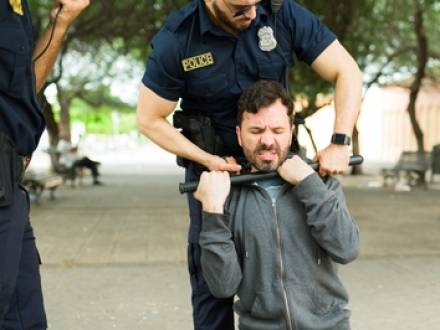 You can fight a resisting arrest charge in Texas in several ways. You may question the officer's account of what happened or argue that your actions did not meet the legal definition of resisting arrest. The legality of the underlying arrest may raise other legal issues. But an unlawful arrest by itself is not a defense to resisting arrest under Texas law.
If you're facing a charge in 2026, our experienced Houston criminal defense lawyers can help you fight back.
What Does Texas Law Say About Resisting Arrest?
Under Texas Penal Code Section 38.03, a person commits resisting arrest if they intentionally prevent or obstruct someone they know is a peace officer from carrying out an arrest, search, or transportation by using force against the officer or another person. Simply arguing with police or refusing to cooperate verbally generally is not enough on its own. The law requires the use of force.
This distinction matters. Being difficult or verbally uncooperative does not automatically amount to resisting arrest. The state must prove the elements required under Section 38.03.
If the Arrest Was Illegal
Texas law generally doesn't allow you to use force to resist an arrest. This is true even if that arrest turns out to be unlawful. But there are limited exceptions involving excessive force by police.
This doesn't mean the legality of the arrest is irrelevant to your defense. The underlying arrest might have been unlawful. If so, this can affect the broader case against you. It may open up other legal challenges, even if it doesn't automatically excuse the resisting arrest charge itself.
Excessive Force Can Change Everything
An officer might have used excessive or unreasonable force during your arrest. If so, this can become an important part of your defense. Texas law recognizes some limited right to protect yourself from truly excessive force. However, this is a narrow exception, and the specific facts of what happened matter.
What Counts as Force in a Resisting Arrest Case?
Physical movements during an arrest are more fact-specific. Pulling an arm away, struggling against an officer's grip, pushing, kicking, or similar conduct may qualify as force depending on exactly what happened.
What Evidence Can Help Your Resisting Arrest Defense?
Building a strong defense often depends on gathering specific evidence that contradicts or complicates the officer's version of events. Helpful evidence includes:
- Body camera or dashcam footage showing what actually happened
- Witness statements from bystanders who saw the arrest
- Medical records showing injuries consistent with your account, not the officer's
- Cell phone video recorded by you or someone nearby
- Prior complaints or records involving the specific officer
Video evidence in particular often becomes the single most important piece of evidence in these cases. It can directly contradict an officer's written report.
Can Multiple Officers' Accounts Conflict With Each Other?
Several officers might write separate reports about the same arrest. When this happens, small inconsistencies often show up between their accounts. These inconsistencies can become powerful tools for challenging the state's version of events. This is especially true when combined with video evidence that doesn't match what officers described.
What Are the Penalties for Resisting Arrest in Texas?
Resisting arrest is generally charged as a Class A misdemeanor. This carries up to one year in jail and a fine of up to $4,000. The charge can be elevated to a third-degree felony if a deadly weapon was used during the alleged resistance. This carries significantly harsher penalties.
Even as a misdemeanor, a conviction creates a criminal record that can affect your future. This is why building a strong defense matters even when the charge seems relatively minor compared to other criminal offenses.
How Can a Defense Attorney Help With a Resisting Arrest Charge?
A defense attorney can review body camera footage and witness statements. They can challenge whether your actions actually met the legal definition of force. They can also identify inconsistencies between officer reports and available evidence. This thorough review often reveals weaknesses in the state's case that protect you from an unfair conviction.
Contact Our Houston Resisting Arrest Defense Attorneys Today
Attorney Doug Murphy is a litigator who treats every case as if it will go to trial, and the rest of our team shares that same approach. We understand how frustrating it feels to face an added charge like this. We’ll work diligently to challenge the state's evidence at every stage.
Contact Murphy & McKinney Law Firm, P.C. at 713-229-8333 to talk to our Houston criminal defense lawyers today.


 Office Location
Murphy & McKinney Law Firm, P.C.
902 Heights Blvd., Houston, TX 77008
P 713-229-8333
F 713-583-0205
Our firm is located in Houston, and we provide representation for people in the surrounding cities and counties, including Cypress, Katy, Spring, Pasadena, La Porte, Deer Park, Friendswood, Baytown, Harris County, Bastrop County, Brazoria County, Fort Bend County, Galveston County, Guadalupe County, Liberty County, Montgomery County, Walker County, Waller County, and Wharton County. We also serve clients throughout the state of Texas.
Results listed are not a guarantee or indication of future case results.